Hypothesis
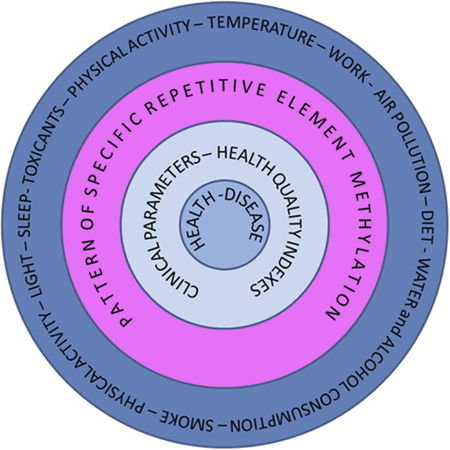
The current literature generally assumes that changes in RE methylation are invariably detrimental to the health of the affected individual. In contrast, MAMELI (MApping the Methylation of repetitive elements to track the Exposome effects on health: the city of Legnano as a LIving lab) is founded on the hypothesis that some REs are plastic elements capable of responding physiologically to environmental stimuli.
REs represent key elements for tracking the adaptability of DNA to environmental triggers. They can be viewed as highly sensitive epigenetic switches distributed throughout the genome that, while normally repressed, may be activated in response to environmental stimuli, ultimately inducing genomic alterations or responses at multiple levels. However, not all REs are expected to be responsive, as global activation would likely lead to profound genome instability.
Accordingly, we propose the existence of specific methylated RE hotspots capable of sensing external and internal stimuli and initiating an adaptive cascade. A healthy genome would respond promptly to environmental inputs, whereas failure to do so may indicate an impaired adaptive capacity, representing an early step toward pathogenesis.
By investigating this hypothesis, the MAMELI project will provide a novel perspective on the role of REs as mediators of genomic adaptability, offering a new understanding of how epigenetic mechanisms contribute to both health and disease in response to environmental pressures.