Air quality monitoring
Participants’ exposure to airborne pollutants, which include PM2.5 (particulate matter <2.5 micrometres), ozone (O₃), and nitrogen dioxide (NO₂), is assessed by an integrated approach combining Land Use Regression (LUR), Chemical Transport Models (CTM), and Geographic Information System (GIS) data.
Data are collected by a dedicated Wireless Sensor Network (WSN) consisting of 16 low-cost air quality monitors (BlueSky™ 8145 sensor system) that has been established across the city of Legnano, covering different areas (e.g. urban, suburban, traffic, and industrial areas). An additional low-cost monitor has been installed in Milan downtown, since the city of Milan is the main work destination for commuters living in Legnano. These monitors offer real-time measurements of the target pollutants (PM2.5, NO₂, O₃) along with other pollutants (CO₂, CO, SO₂), as well as meteorological parameters (temperature, relative humidity (RH)) at a 1-minute resolution.
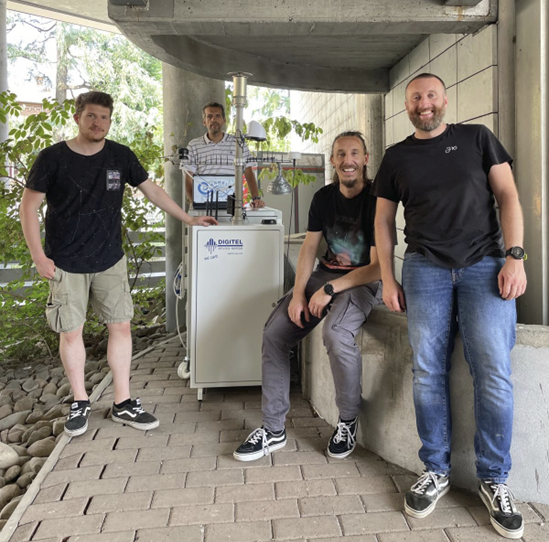
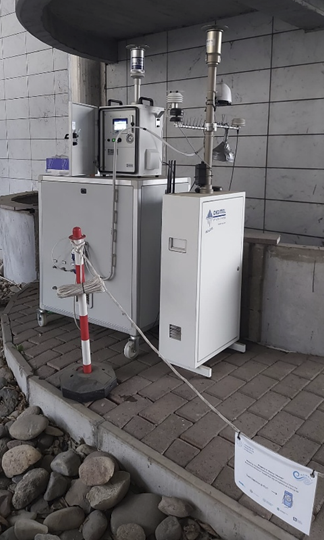
To calibrate and correct the measurements obtained from the low-cost sensors in the WSN, three reference-grade instruments have also been installed at a selected location (the “MAMELI supersite”), alongside a co-located low-cost monitor. These instruments include:
- DPA14 Gravimetric Sampler, which provides accurate PM2.5 concentrations with a 24-hour time-integrated average.
- AC32e NO₂ Monitor, which measures NO₂ concentrations at a 1-minute resolution.
- O342O₃ Monitor, which measures O₃ concentrations at a 1-minute resolution.
As participants are likely to travel beyond Legnano’s boundaries, additional data are obtained from the Lombardy Regional Environmental Protection Agency (ARPA Lombardia), which monitors hourly pollutants concentration through fixed stations located across the Lombardy region.
To achieve precise, location-based exposure estimates, air pollution measurements are combined with subjects’ positions that are determined every 5 minutes by Global Positioning System (GPS) coordinates, downloaded by Google Maps service from each subject’s smartphone.
Check out the latest Air Quality Reports here!